
By Ravisankar KV
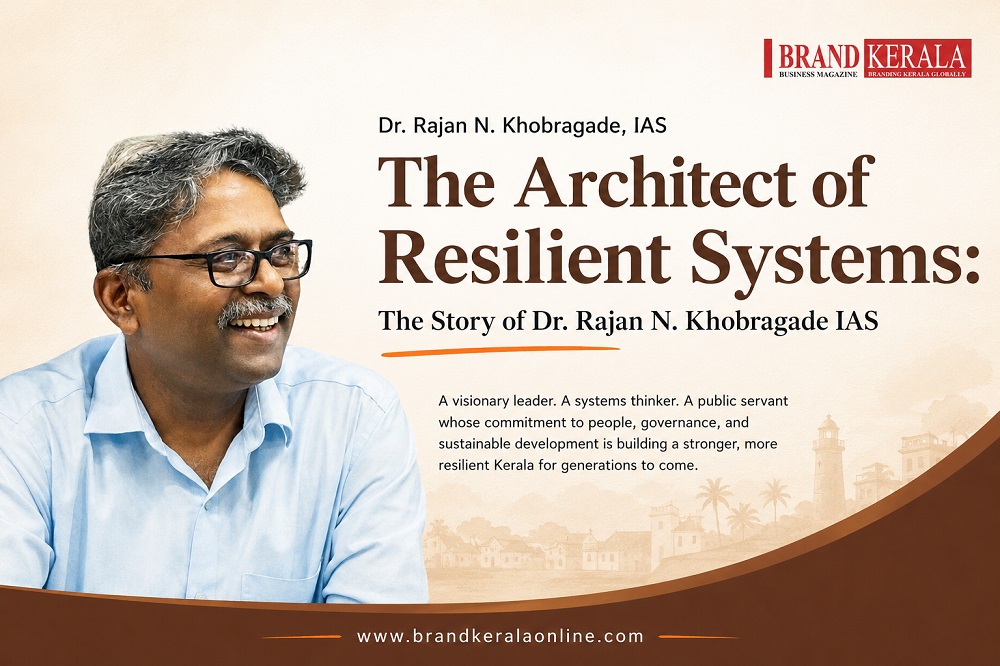
After more than three decades in the Indian Administrative Service, Dr. Rajan N. Khobragade, Additional Chief Secretary to the Government of Kerala, retires from active service today – closing a career that has touched nearly every major dimension of governance in the state he made his own, despite having been born in a different one entirely.
It is a measure of the man that his retirement will likely be marked less by ceremony than by the quiet, structural continuities he leaves behind: health systems that function more efficiently because of decisions he made, a tourism destination that exists in the form it does because of groundwork he laid twenty-five years ago, and an institutional culture, across multiple departments, that bears the imprint of an administrator who treated governance less as a political exercise than as a diagnostic discipline.
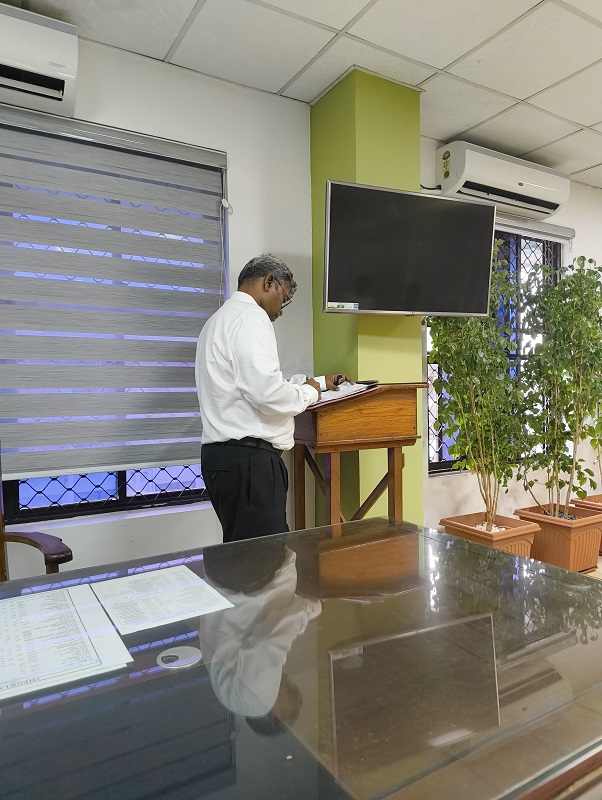
A Physician’s Mind in a Bureaucrat’s Career
Dr. Khobragade’s path into the civil service was, from the outset, unusual. Hailing from Maharashtra and holding a medical degree, he entered the 1993 batch of the IAS not as a generalist but as someone trained to read systems the way a physician reads symptoms – looking past the immediate complaint to the underlying structural cause. This diagnostic instinct, colleagues have long observed, came to define his entire approach to administration: treating institutional failure not as a matter for temporary fixes but as a condition requiring structural intervention.
Allotted to the Kerala cadre, he moved from Maharashtra and integrated himself into the state’s distinctive, decentralised administrative culture with a thoroughness that, over the following three decades, made him one of its most trusted internal hands – an outsider who became, in every functional sense, an insider.
The Early Years: Idukki and the Discipline of Difficult Terrain
Dr. Khobragade’s first major test came as District Collector of Idukki, from July 2000 to August 2001 – a posting that, though brief, placed him at the centre of one of Kerala’s most ecologically sensitive and administratively demanding districts. Encroachments on the Cardamom Hill Reserves, complex land-tenure disputes, a large and vulnerable tribal population, and the sheer operational difficulty of delivering services across the high-altitude terrain of the Western Ghats – all of this fell within his charge as head of the District Planning Committee.
It was here, working to ensure that Kerala’s historic decentralisation campaign actually reached remote hill panchayats, and conducting some of his earliest work in maternal care and malnutrition tracking among tribal communities, that the foundations of his later, more famous public health career were quietly laid. The lesson he carried forward – that macro-level policy fails unless it accounts for difficult terrain and marginalised populations – would prove decisive two decades later.
Building Bekal: The Tourism Years
Between 1998 and 2000, in a dual role as Additional Director (General) of the Kerala Tourism Department and Managing Director of the Bekal Resorts Development Corporation, Dr. Khobragade took on a project of genuinely historic significance: converting the master plan for Bekal, in Kasaragod district, into India’s first planned beach tourism destination.
The scale of the undertaking is easy to understate in retrospect. Across four remote coastal panchayats – Ajanur, Uduma, Pallikkara, and Chemmanad – he oversaw the conversion of 22 acres of Bekal Beach into a publicly accessible amenity centre even as international hospitality groups were being courted to invest, ensuring that local communities retained genuine access to their own coastline rather than being displaced by it. He laid 11KV electricity lines, installed transformers, and built water supply networks designed to serve world-class resorts and surrounding villages simultaneously – infrastructure layering that addressed northern Kerala’s chronic underdevelopment while building the foundation for an entirely new tourism economy.
This was also the era of Kerala Tourism’s iconic “God’s Own Country” campaign, and as Additional Director (General), Dr. Khobragade served as its operational engine room – establishing the regulatory and quality-grading frameworks for homestays, resorts, and Ayurvedic centres that protected the integrity of the Kerala brand even as the sector expanded rapidly. He worked during this period alongside Dr. Venu Vasudevan, then Director of Tourism and later Chief Secretary of Kerala, and Amitabh Kant, then Tourism Secretary – two figures with whom he shared both a formative professional partnership and, in Dr. Venu’s case, a notable personal and professional kinship: both were medical graduates who had become IAS officers, and Dr. Khobragade would later succeed Dr. Venu as Managing Director of BRDC.
What grounded the Bekal project’s eventual success, beyond the policy architecture, was Dr. Khobragade’s grassroots approach – his systematic completion of drinking water projects across the tourism zone and neighbouring panchayats, alongside road upgrades and electricity improvements, which substantially eased local opposition to what was, for the region, a genuinely disruptive mega-project. The negotiation skills, land acumen, and sustainable development principles he developed at Bekal would inform every major assignment that followed.
UNAIDS and the Global Stage
Between 2009 and 2012, Dr. Khobragade stepped beyond Kerala and India altogether, serving as Team Leader and Director for UNAIDS, the Joint United Nations Programme on HIV/AIDS. The posting exposed him to global best practices in disease surveillance and resource optimisation – an international apprenticeship that would prove unexpectedly prescient when, less than a decade later, Kerala became the gateway for India’s first COVID-19 cases.
The Crucible: Kerala’s Pandemic Response
It is for his leadership during the COVID-19 pandemic that Dr. Khobragade will likely be most widely remembered. As Principal Secretary and later Additional Chief Secretary of the Health and Family Welfare Department, he became, alongside the state’s political leadership, the architect of Kerala’s celebrated “Trace, Quarantine, Test, Isolate, and Treat” strategy – a response that drew international attention for its effectiveness and became a reference model studied well beyond India’s borders.
He oversaw the massive scaling of the Aardram Mission, transforming primary health centres into family health centres capable of genuine triage, and managed oxygen logistics, bed availability, and localised lockdowns through real-time data tracking with a precision that minimised economic disruption relative to many global counterparts. Throughout, under intense public and media scrutiny, he maintained a composure rooted strictly in epidemiological evidence rather than political pressure – a steadiness that earned him respect across the political spectrum, a rare achievement in any health crisis of that magnitude.
Beyond the pandemic, his stewardship of the Health Department included chairmanship of the Kerala Medical Services Corporation Limited, overseeing one of India’s most efficient public medical procurement systems, and of the Kerala State Organ and Tissue Transplant Organisation, supporting a transplant programme that has become a national benchmark for ethical, transparent healthcare administration.
A Career of Deliberate Versatility
What distinguishes Dr. Khobragade’s record, beyond any single achievement, is its range. As Commissioner of Commercial Taxes, he brought the same structural discipline to fiscal administration during a critical transition period. As Chairman and Managing Director of the Kerala State Electricity Board from 2023, he turned that same diagnostic rigour toward grid stability and the complex financial health of the state’s power sector. Water Resources, Agriculture, AYUSH, Cultural Affairs, Personnel and Administrative Reforms – each additional charge entrusted to him over the decades reflected a government’s confidence that he could move between sectors without losing the thread of competent, evidence-based execution.
Colleagues across this span of his career have consistently described him in similar terms: calm, methodical, solutions-oriented, allergic to shortcuts. His governance philosophy – evidence-based decision-making paired with transparent, citizen-centric delivery – proved remarkably portable across portfolios as different as tourism infrastructure and pandemic response, tax administration and electricity reform.
A Legacy in Three Pillars
If Dr. Khobragade’s career can be reduced to a set of governing principles, they are these: institutional resilience, built by shifting healthcare from a reactionary to a preventive, decentralised model through the Aardram Mission; evidence-based policy, demonstrated through his use of epidemiological data tracking during both the Nipah outbreak and COVID-19; and cross-sectoral execution, proven by his ability to move seamlessly between public health, fiscal administration, tourism infrastructure, and power-sector reform, applying the same rigorous structural accountability to each.
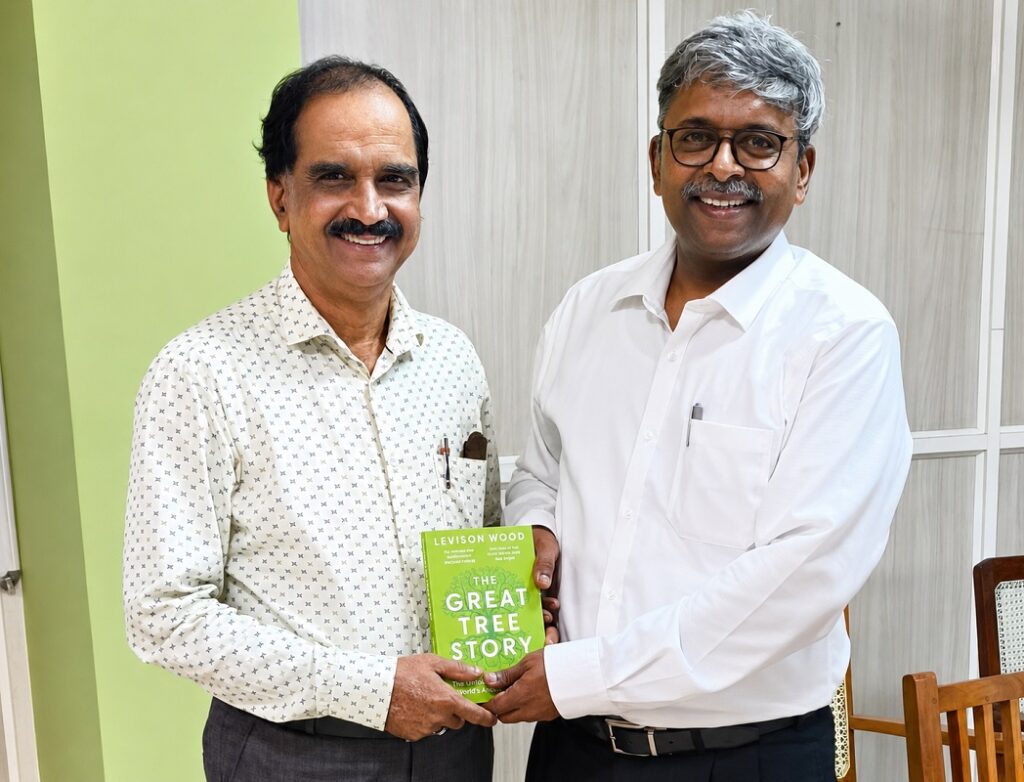
Closing a Distinguished Innings
Dr. Rajan N. Khobragade departs the Indian Administrative Service today having spent more than thirty years building the kind of institutional resilience that rarely makes headlines in the moment but defines, over decades, how well a state actually functions. From the hill terrain of Idukki to the coastline at Bekal, from the corridors of UNAIDS to the command centre of Kerala’s pandemic response, from the boardroom of KSEB back to the helm of Health and Family Welfare – his has been a career built less around individual milestones than around the patient, structural work of making systems work better for the people who depend on them.
Kerala’s public administration is, in measurable ways, more resilient for his three decades within it. That, perhaps, is the legacy that matters most.