
Indo Arab Connect 2026 spotlights how authentic wellness credentials could reposition Kerala as a premium global destination brand for Arab luxury travellers
As Kerala works to strengthen its identity on the global tourism map, a session at the Indo Arab Tourism Conclave 2026 – South Asia’s biggest-ever Arab travel and healthcare event – turned the spotlight on wellness tourism as a strategic branding asset for the state, one capable of driving both international visibility and forex earnings if positioned correctly.
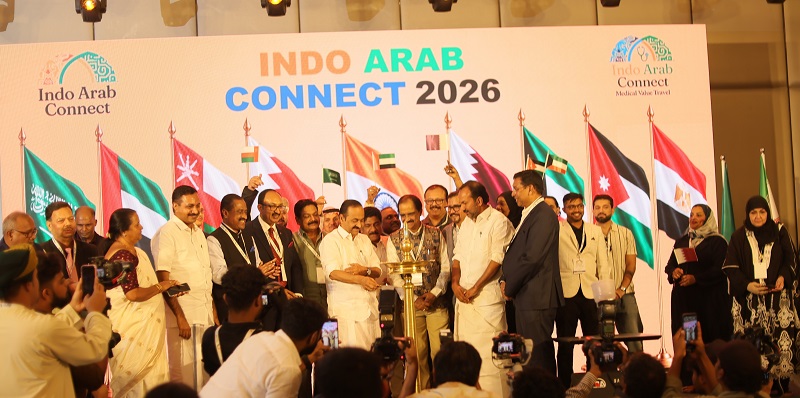
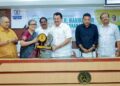
Mr. V.D. Satheesan, Chief Minister of Kerala, inaugurated the event in the presence of Mr. P.C. Vishnunadh, Minister for Tourism & Culture, Government of Kerala; Mr. Deepak Joy, MLA; Mr. E.M. Najeeb, President, Confederation of Kerala Tourism Industry; Mr. Rasheed Kakkat, President, Association of Arab Tour Operators; and Mr. Ravisankar K.V., Managing Editor & CEO, Tourism India Media Group.
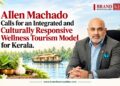
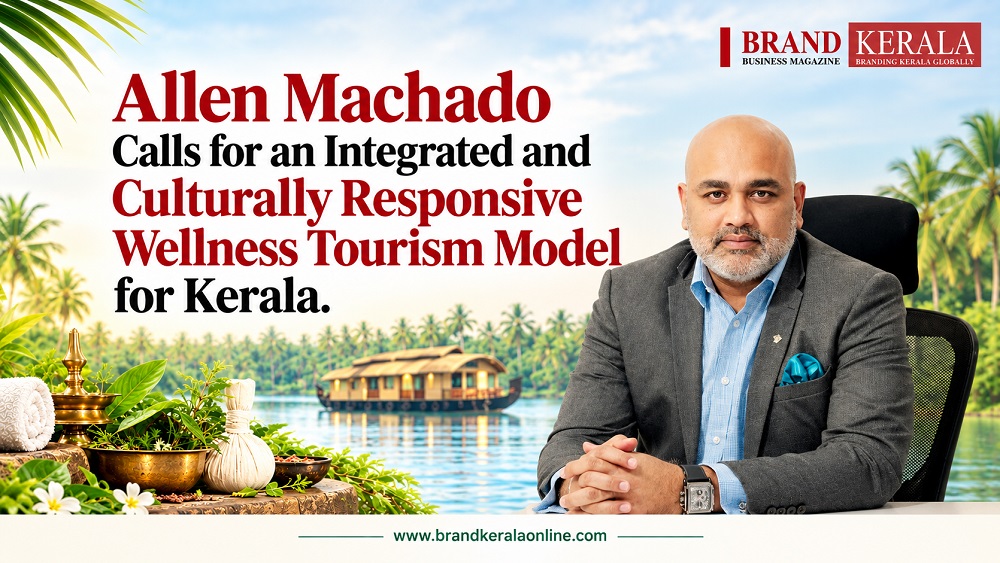
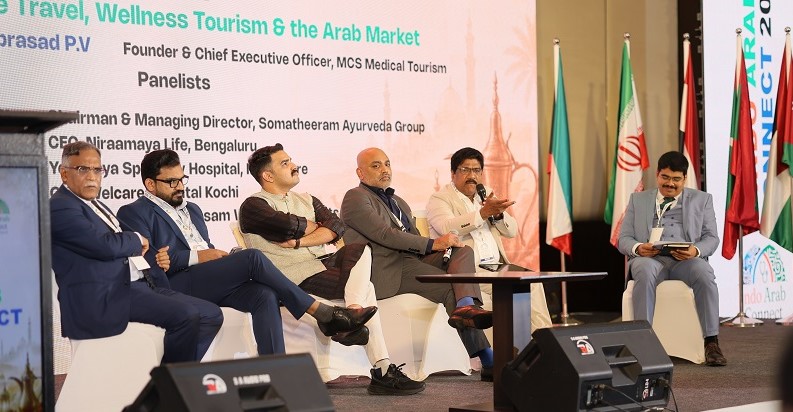
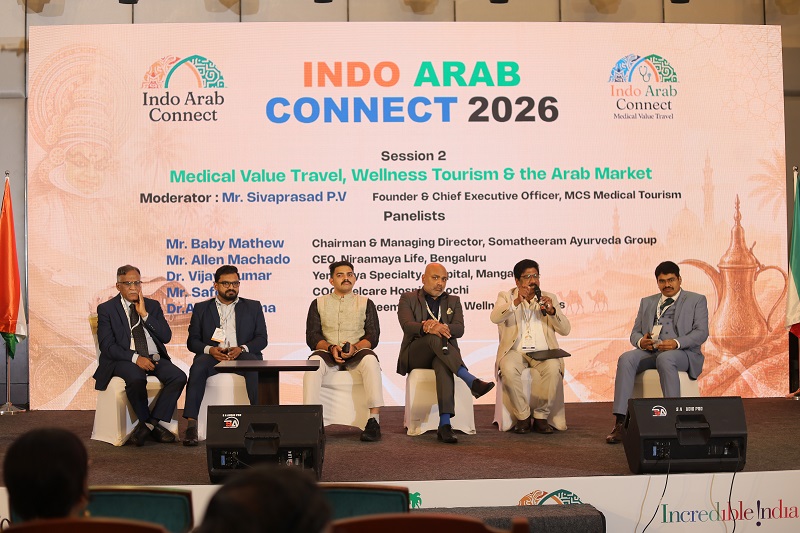
Speaking at the conclave, held at Crowne Plaza Kochi as part of Indo Arab Connect 2026, Mr. Allen Machado, CEO of Niraamaya Life, argued that Kerala’s Ayurveda heritage, natural landscapes and cultural depth give it a brand advantage that most competing destinations simply cannot replicate. The panel discussion, “Medical Value Travel, Wellness Tourism & the Arab Market,” was moderated by Mr. Sivaprasad P.V., Chief Executive, MCS Medical Tourism, and brought together voices from tourism, healthcare and wellness. Mr. Baby Mathew Somatheeram, pioneer of Ayurveda and Wellness Tourism in the world, Dr. Vijayakumar, Consultant Yenepoya Hospital Group Mangalore; Mr. Sajeev K.V., President, Ayurveda Promotion Society; Mr. Safeer, COO, Welcare Hospitals Kochi and Mr. Abhijit Karma, Healthcare Exppert and entrepreneur and Director, Vasan Eyecare, were among the panellists.
An Authentic Brand, Not Yet Fully Monetised
Machado’s core message carried a clear economic undertone: Kerala’s wellness credentials are globally distinctive, but the state has not yet converted that authenticity into consistent, high-value revenue from the luxury travel segment – particularly from the GCC, where demand for credible wellness and medical value travel is rising sharply.
“Today’s luxury wellness traveller is looking for privacy, personal attention, professional credibility and an experience that creates a meaningful difference in their life. Kerala already has the knowledge, heritage, natural environment and hospitality. The next step is to deliver these strengths with greater consistency, accessibility and personalisation while protecting the authenticity that makes Kerala so special,” Machado said.
For Kerala’s economy, the implication is direct: every improvement in consistency and accreditation widens the pool of high-spending international travellers the state can credibly attract – translating into higher per-visitor revenue, longer stays, and stronger repeat and referral business from the Arab world.
Building the “Brand Kerala” Case Through Standards, Not Just Scenery
Machado called for stronger accreditation, measurable treatment outcomes and transparent protocols to distinguish medically supervised wellness programmes from conventional spa holidays – a distinction he said is essential to building international confidence and, by extension, brand equity for Kerala as a destination of substance rather than just scenery.
He also outlined the infrastructure of trust that underpins a credible global brand: Arabic-speaking support, halal cuisine, prayer facilities, privacy, and family-oriented care for accompanying parents, spouses and children. Illustrating this with the example of a Dubai-based business leader travelling with his wife and elderly parents, Machado described how individually tailored programmes – Ayurveda and health assessments for the traveller, gentle therapies for elderly parents, preventive wellness for a spouse, and continued virtual consultations after return – convert a single family booking into a long-term brand relationship rather than a one-time transaction.
A Call for Coordinated State Branding
Machado’s concluding appeal was aimed squarely at the ecosystem that shapes Kerala’s global image: government, airlines, healthcare providers, wellness retreats and travel partners. He urged them to move beyond individual promotions and work toward one integrated, internationally credible Kerala wellness brand.
“Kerala should not merely serve as the backdrop to a wellness journey. Its nature, culture, cuisine, healing traditions and communities should become an integral part of the experience. This is the standard we must consistently deliver if Kerala is to become the preferred wellness destination for luxury travellers from the Arab world and beyond,” he said.
For a state increasingly focused on diversifying its economic base and strengthening its global positioning, the message from Indo Arab Connect 2026 was clear: wellness tourism is not just a travel category for Kerala – it is a branding opportunity with direct economic upside, provided the state can match its natural and cultural authenticity with world-class consistency and delivery.
The Indo Arab Tourism Conclave formed part of Indo Arab Connect 2026, which brought together tourism leaders, policymakers, healthcare professionals, investors and travel partners from India, the GCC and the wider Arab world.